Antigua’s sustainability strategy and what it means for high end stays
Antigua and Barbuda has stopped treating sustainability as a side project. The Antigua and Barbuda Ministry of Tourism now frames every major decision in the visitor economy around environmental limits, community benefit and long term economic resilience. For a business leisure traveler, that shift quietly reshapes where you sleep, how you move and which bay becomes your base.
The government’s sustainable tourism strategy rests on three pillars. First comes environmental stewardship, with tools such as Green Globe certification, renewable energy pilots and conservation programs that protect the island environment from reef to rainforest. Second is supporting local communities through training, community managed attractions and policies that keep more tourism revenue circulating in the local economy, a priority highlighted in the Antigua and Barbuda Tourism Strategic Plan 2021–2025.
The third pillar is long range viability, because tourism already contributes around half of national GDP and climate change is no longer abstract here. World Travel & Tourism Council data and national statistics place the sector’s total contribution at roughly 50% of Gross Domestic Product in recent years. Rising sea temperatures, stronger storms and coastal erosion threaten both natural beauty and the premium hotel inventory that lines each sheltered bay. Antigua and Barbuda’s sustainable tourism policy in the wider Caribbean context is therefore not branding; it is survival planning for an island destination that lives or dies by its environment. Sustainable Travel International and the Ministry of Tourism both underline this dependence in recent briefings, which is why resilience now appears in every major strategy document and climate adaptation plan.
One of the most visible expressions of this strategy is the Green Corridor on Antigua’s south coast. Officially launched as a designated area promoting sustainable tourism practices in the late 2010s, this Green Corridor links eco friendly properties, farm to table restaurants and low impact excursions into a coherent route. Government releases describe it as a pilot “model area” for responsible tourism, with signage, agreed standards and periodic monitoring. For travelers, it offers a curated way to experience greener tourism without sacrificing comfort or service standards, with several boutique hotels and villas now highlighting their participation in corridor initiatives.
Wallings Nature Reserve, a community led project managing more than 680 hectares of rainforest, anchors the inland side of this sustainable destination. Here, local guides lead hikes that explain how conservation, water security and tourism intersect on a small island. When you pay the modest entrance fee, you are directly supporting local jobs, trail maintenance and environmental stewardship rather than a distant corporate balance sheet. As one Wallings guide puts it, “Every ticket helps us keep the forest standing and the village working,” a reminder that conservation and livelihoods are tightly linked and that community based tourism can be both rigorous and rewarding.
On the coast, Carlisle Bay Resort shows how a luxury property can align with national sustainable tourism goals. The hotel’s Green Globe certification is not a plaque in the lobby but a framework for energy efficiency, waste reduction and eco conscious purchasing. Guests notice the absence of single use plastics, the emphasis on local produce and the discreet messaging about reef safe sunscreen rather than any reduction in comfort. Internal reporting at properties of this calibre often tracks kilowatt hours per guest night, water use and recycling rates, turning sustainability into a measurable part of the guest experience and allowing third party auditors to verify progress.
Government, resorts and non profits now collaborate more closely than many Caribbean peers. Partners range from international sustainability bodies to grassroots groups such as Wallings, with Sustainable Travel International advising on destination stewardship and monitoring. The ambition is clear: to position Antigua and Barbuda as a leading sustainable destination where high value tourism coexists with conservation rather than consuming it, supported by formal memoranda of understanding and regular stakeholder forums. Local environmental organisations, however, have also urged authorities to publish clearer timelines and independent evaluations so that these commitments can be tracked against on the ground outcomes.
For executives extending a work trip into leisure, this context matters when choosing where to stay. Selecting an eco friendly hotel inside the Green Corridor or near a protected bay is no longer a niche gesture. It is a practical way to align your travel plans in Antigua with the island’s own sustainability trajectory while still enjoying a refined Caribbean escape, and it signals to local partners that low impact luxury has a strong, paying audience.
Carbon neutral cruising, electric transport and the reality on the ground
Antigua’s boldest sustainability claims sit around cruise tourism and low carbon transport. The new cruise terminal under development in St. John’s is marketed as a gateway to carbon neutral cruising, yet the reality is more nuanced than a brochure line. For luxury travelers who occasionally arrive by ship before transferring to a premium hotel, understanding that nuance helps you make more eco conscious choices.
Carbon neutral cruising in this context usually means a mix of cleaner fuels, efficiency upgrades and offset programmes rather than zero emissions. Some ships calling at St. John’s experiment with lower sulphur fuels and advanced wastewater treatment, which reduces direct environmental impact in the harbour. Offsetting schemes then claim to balance remaining emissions, though the quality of those offsets varies and rarely benefits the local environment directly. Cruise line sustainability reports and Antigua Port Authority statements increasingly disclose fuel types, shore power readiness and waste handling, giving curious guests more data to interrogate and compare across itineraries.
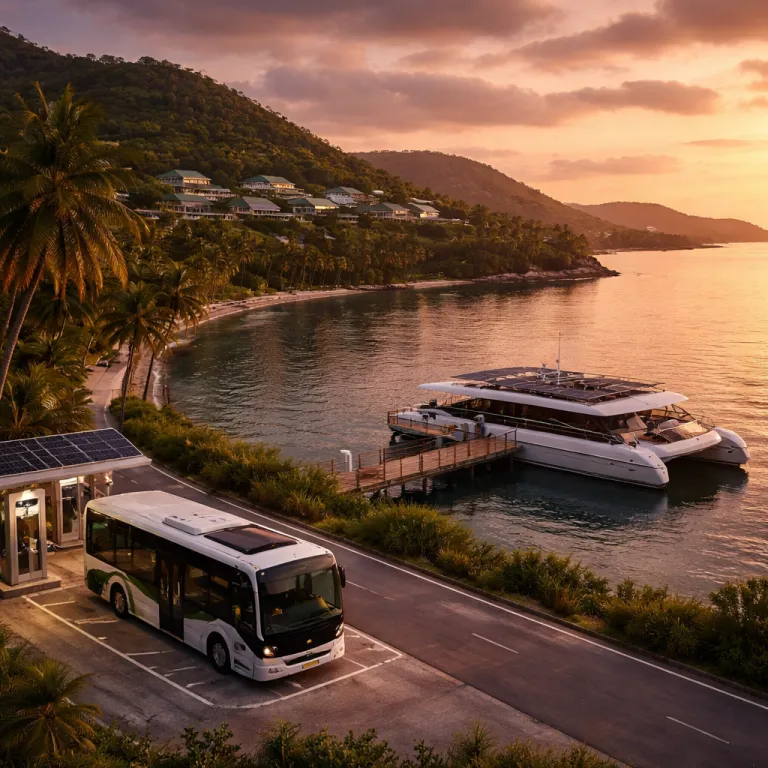
Where Antigua and Barbuda’s sustainable tourism agenda becomes more tangible is on shore. The Ministry of Tourism has begun introducing electric buses for shore excursions, particularly along routes that connect the cruise port with the Green Corridor and key beaches. Early announcements referenced an initial fleet of a handful of vehicles—press briefings in 2022 mentioned fewer than ten coaches—with plans to scale up as charging points expand. When you step into a quiet, air conditioned electric coach rather than a diesel minibus, you are experiencing climate policy translated into everyday travel.
These electric vehicles cut local air pollution in St. John’s and reduce noise in small coastal communities. They also send a signal that responsible travel can be both comfortable and lower impact, especially when paired with guides trained to talk about conservation and culture rather than only shopping stops. Over time, expect more hotel transfers and private charters to adopt similar technology as charging infrastructure expands across the island and public tenders increasingly favour low emission fleets, a trend already noted in regional transport planning documents.
For business leisure guests, the practical question is whether you will notice the difference between a conventional transfer and an eco friendly one. The answer is yes, but mostly in subtle ways such as quieter rides, cleaner air and the narrative your hotel shares about its transport partners. Choosing operators that align with green tourism principles becomes another lever for supporting local initiatives without sacrificing efficiency, and some properties now list preferred low carbon transfer options in pre arrival communications and corporate travel briefs.
There is also a regional dimension to this shift. Antigua competes with other Caribbean destinations, from Saint Lucia to Canouan, for high spending travelers who increasingly ask about sustainability. When you compare a refined Caribbean escape in Canouan with a stay in Antigua and Barbuda, the presence of electric shore transport, visible environmental stewardship and published climate targets can tip the balance for eco conscious guests who read beyond glossy imagery and look for verifiable indicators.
Luxury hotels that rely on cruise tourism for part of their clientele are quietly recalibrating. Some now coordinate with cruise lines to offer low impact excursions that connect guests to the Green Corridor, Wallings Nature Reserve or marine parks instead of only duty free shopping. This is where Antigua’s sustainable tourism ambitions start to reshape itineraries, not just infrastructure, with excursion descriptions highlighting conservation fees, small group sizes and certified nature guides, and in some cases referencing protected area regulations.
Yet there is a tension between the scale of new cruise infrastructure and the fragility of the island environment. A larger terminal can mean more ships, more visitors and more pressure on bays, roads and freshwater supplies. The real test will be whether growth in cruise tourism is capped or carefully managed so that the island remains a sustainable destination rather than a cautionary tale, a question already raised in local consultations and environmental impact assessments submitted as part of port expansion approvals.
Marine conservation, Green Fins and the luxury guest’s role underwater
The most delicate arena for Antigua and Barbuda’s sustainable tourism policy lies offshore. Coral reefs, seagrass beds and mangroves underpin both natural beauty and coastal protection, yet they are acutely vulnerable to climate change and careless tourism. For travelers who plan to split their time between boardrooms and bays, the way you snorkel, dive and sail matters more than you might think.
Antigua and Barbuda participate in the Green Fins programme, a global initiative that helps dive and snorkel operators reduce their environmental impact. Under this framework, guides are trained to brief guests on buoyancy control, reef safe sunscreen and respectful wildlife interactions, which directly reduces damage to coral and seagrass. When you choose an operator aligned with Green Fins principles, you are effectively voting for higher environmental standards in the marine tourism sector, and Green Fins scorecards provide a benchmark for continuous improvement that operators can share with guests.
Marine parks and protected bays around Antigua and Barbuda now use zoning to balance recreation and conservation. Some areas prioritise no anchor policies and mooring buoys to protect fragile seabeds, while others channel higher traffic to more resilient sites. This approach recognises that sustainable tourism does not mean closing the sea but managing how, when and where people enter it, with park authorities tracking visitor numbers and reef health indicators such as coral cover and fish biomass through periodic surveys and regional monitoring programmes.
Barbuda tourism adds another layer with its celebrated bird sanctuary in Codrington Lagoon. Here, thousands of magnificent frigate bird individuals nest in mangroves, creating one of the Caribbean’s most dramatic wildlife spectacles. Visiting with a licensed local guide ensures that your presence supports conservation funding and that boat routes respect sensitive roosting areas. Local regulations limit group sizes and approach distances, and guides often share updates from recent bird counts and habitat surveys carried out with conservation NGOs.
Environmental stewardship offshore also intersects with luxury hotel operations on land. Properties such as Carlisle Bay Resort invest in wastewater treatment, careful landscaping and reef education to reduce runoff and sedimentation that can smother coral. Some high end resorts now integrate marine biologists into guest programming, turning a casual snorkel into a short course on climate change and reef resilience, and publishing brief annual updates on nearby reef conditions or beach erosion in their sustainability reports.
For eco conscious executives, the most powerful decisions are often the smallest. Choosing reef safe sunscreen, declining single use plastics on boats and following Green Fins guidance on not touching coral all contribute to conservation. These actions align personal behaviour with the broader sustainable tourism agenda in Antigua and the wider Caribbean in a way that feels tangible rather than theoretical, especially when guides explain how each choice reduces stress on already warming reefs and complements national marine policies.
Arrival logistics also play a role in shaping your environmental footprint. Understanding the Antigua Caribbean airport code and planning seamless luxury hotel transfers reduces unnecessary hops, duplicated journeys and last minute charter flights. Efficient routing is not glamorous, but it is part of a more sustainable destination mindset that respects both time and environment, and many corporate travel policies now explicitly encourage this kind of optimisation and carbon aware itinerary design.
As marine conservation programs mature, expect more transparent reporting on reef health, fish biomass and visitor numbers in key bays. Luxury travelers should start asking hotels and operators for this kind of data, rewarding those who share clear metrics and adapt practices when the environment shows stress. In a small island context, informed questions from high value guests can accelerate change faster than any press release, reinforcing the work of park managers, NGOs and the Ministry of Tourism and adding an extra layer of accountability.
Balancing exclusive islands, local communities and the Green Corridor future
Nowhere is the tension between exclusivity and sustainability sharper than on Antigua’s most coveted stretches of coast. Private peninsulas, low rise luxury resorts and yacht dotted bays promise seclusion, yet they sit within communities that depend on tourism for livelihoods. The question is whether Antigua and Barbuda’s sustainable tourism ambitions can reconcile these worlds without diluting either.
The Green Corridor offers one template for that balance. By clustering eco friendly hotels, farm visits and community led experiences along a defined route, it channels investment into areas where local residents retain agency. Guests move from a refined beachfront suite to a hillside farm lunch or a village craft workshop, seeing how supporting local businesses becomes part of the luxury narrative rather than an optional add on, and corridor branding makes it easier to identify such experiences in brochures and booking engines.
Wallings Nature Reserve is a case study in how community management can elevate both conservation and guest experience. Local guides, many of whom grew up in the surrounding villages, interpret the forest through stories of water catchments, traditional medicine and hurricane recovery. Their presence turns a simple hike into a masterclass in environment, history and resilience that rivals any resort led activity, and visitor numbers are capped on busy days to protect trails and wildlife, a policy noted in reserve management guidelines.
On Barbuda, the stakes are even higher because the island’s low lying topography makes it acutely vulnerable to climate change. Plans for high end resorts along its pink sand beaches must grapple with fragile ecosystems, limited freshwater and the cultural importance of communal land. Barbuda tourism that foregrounds the bird sanctuary, the frigate bird colonies and small scale guesthouses offers a different model from enclave style developments, and post hurricane rebuilding plans have repeatedly highlighted the need for climate smart design, elevated structures and robust environmental impact assessments.
For business leisure travelers, choosing where to stay becomes an ethical as well as aesthetic decision. A resort that sources food from nearby farms, invests in staff training and participates in conservation programs contributes more to sustainable tourism than one that imports everything behind a gate. Asking direct questions about environmental policies, community partnerships and long term sustainability plans is not impolite; it is responsible, and many general managers now expect and welcome this level of scrutiny from corporate clients and independent guests.
Antigua’s sailing heritage adds another dimension to this conversation. When you charter a yacht or join a regatta, you are entering a maritime culture that predates mass tourism and still shapes local identity. Our detailed guide to the islands’ maritime soul at sailing in Antigua from Nelson’s Dockyard to the racing circuit shows how wind, reef and harbour life intersect with modern luxury, and how race organisers increasingly integrate environmental codes of conduct, from waste rules to no discharge zones.
The most credible properties now publish sustainability reports, track energy and water use and set clear targets for waste reduction. They engage with initiatives such as the Green Fins programme, sponsor conservation education in local schools and collaborate with the Antigua and Barbuda Ministry of Tourism on pilot projects. This is where the country’s sustainable tourism commitments move from rhetoric to measurable change, often summarised in annual impact highlights shared with guests and investors and, in some cases, aligned with global reporting frameworks.
As a traveler, your leverage lies in what you book, what you ask and what you praise publicly. Choose hotels within or aligned with the Green Corridor, favour operators who practice low impact, friendly travel design and share feedback that highlights environmental and social performance. When enough high value guests behave this way, sustainable destination management stops being a niche and becomes the default operating system for these islands, reinforcing the policy direction set by government and local communities and helping to keep Antigua and Barbuda competitive in the wider Caribbean.
Key figures shaping sustainable luxury travel in Antigua and Barbuda
- Tourism contributes around 50% of Antigua and Barbuda’s Gross Domestic Product, according to Sustainable Travel International, the World Travel & Tourism Council and national tourism statistics, which makes sustainable tourism policies central to national economic stability.
- The twin islands offer approximately 365 beaches, as reported by Visit Antigua & Barbuda, so managing environmental impact across this extensive coastline is critical for long term conservation and for maintaining the appeal of high end coastal resorts.
- Since the launch of the Green Corridor and the establishment of Wallings Nature Reserve, the number of eco certifications among hotels has increased, with several properties now holding Green Globe or similar labels, signalling a shift toward green tourism standards in the luxury segment and giving travelers verifiable indicators to look for.
- Community based tourism initiatives, including locally managed reserves and cultural tours, have grown in both number and visibility, helping to keep more tourism revenue within local communities and supporting jobs beyond the traditional resort sector, according to Ministry of Tourism progress updates.
- Renewable energy use within the tourism sector is expanding through pilot projects in hotels and public infrastructure, supporting national climate change mitigation goals and complementing efficiency measures such as LED lighting, smart cooling systems and water saving technologies that are increasingly referenced in hotel sustainability disclosures.