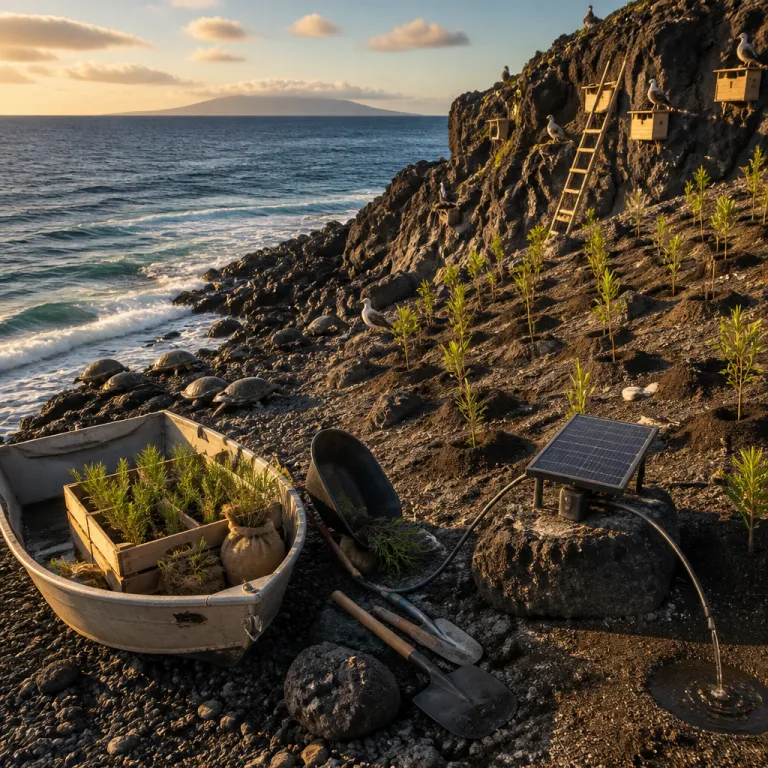
Redonda island antigua conservation restoration and the luxury traveler
Redonda sits alone in the Caribbean Sea, a dark volcanic shard rising sharply between Antigua and Montserrat. Once written off as a ruined rock, this island now anchors one of the most compelling conservation and restoration stories anywhere in the region. For travelers booking luxury hotels in Antigua and Barbuda, understanding this transformation adds rare depth to an otherwise classic beach escape.
In the nineteenth century, phosphate mining stripped the island bare and left scars still visible from Antigua’s west coast. When the miners left, feral goats and invasive rats remained, grazing every green shoot and raiding eggs until native species collapsed and the Redonda ecosystem seemed finished. The result was a cautionary tale for Caribbean islands, a place where flora and fauna had been pushed to the brink by extractive industry and careless introductions of non-native animals.
That narrative has changed decisively thanks to a coalition led by the Environmental Awareness Group, the national conservation NGO usually known as EAG. Working with Fauna & Flora (formerly Fauna & Flora International) and the Government of Antigua and Barbuda, the project removed more than sixty goats and thousands of rats, then monitored the reserve with scientific precision.[1][2] Today, when you sip a rum punch at a five star resort in Antigua and read about the new ecosystem reserve, you are looking at a destination reframed by serious environmental stewardship rather than marketing alone.
From guano rush to ecological ruin on Antigua’s forgotten third island
To understand why Redonda’s conservation and restoration story matters, you need the backstory written into its cliffs. Guano mining once made this island briefly valuable, as workers carved terraces into the rock and loaded phosphate onto ships that crossed the Caribbean Sea. When the guano boom ended in the early twentieth century, the miners left behind rusting cables, eroded slopes and a fragile landscape that goats and rats would soon dominate.
Those goats, descendants of animals left for meat, multiplied quickly and stripped every accessible patch of flora until the slopes looked like a quarry. Invasive rats followed the same arc, arriving on ships and then spreading across the island, devouring eggs, chicks and invertebrates that held the food web together. By the time conservation biologists surveyed the Redonda ecosystem in detail, they found a near silent rock where seabird colonies had once filled the air and endemic species clung on in tiny refuges.
For travelers planning what to do in Antigua for a luxurious Caribbean stay, this history might feel distant at first. Yet the same Antigua and Barbuda coastline that hosts your infinity pool also frames the horizon where Redonda rises, reminding guests that every island has a story beyond the spa menu. Choosing properties that support local conservation, ask about EAG projects and highlight native flora and fauna in their guest programming turns a standard holiday into a stay that quietly reinforces environmental awareness.
The intervention: how goats and rats were removed and life returned
The turning point in the Redonda restoration story came when local and international partners decided that the island was not expendable. The Environmental Awareness Group assembled a skilled équipe of climbers, field biologists and wildlife managers, then partnered with Fauna & Flora and Re:wild to design a full restoration.[1][3] Over a carefully planned period that spanned multiple field seasons from 2016 to 2017, they used bait stations, traps and rope access to reach every ledge where invasive species still held on.
More than sixty goats were removed from the island, ending the constant grazing pressure that had prevented any serious recovery of vegetation.[1] At the same time, specialists targeted invasive rats with precision methods until monitoring showed that the population had collapsed and native species could finally breed safely again. The work was physically demanding, with teams moving equipment up near vertical slopes above the sea, but the payoff came quickly as the first green shoots appeared in gullies that had been bare for decades.
Within months, grasses and shrubs began to reclaim the terraces carved during the mining era, and the first carpets of young flora signaled that the Redonda ecosystem still held surprising resilience. Seabirds responded just as fast, with ground nesting species returning to sites where eggs were no longer raided by invasive predators each night. For luxury travelers considering private charters or even exclusive island weddings at nearby properties, this successful restoration now sits alongside reef protection and low impact sailing as part of Antigua and Barbuda’s broader sustainable travel narrative, echoed in guides to elegant island celebrations such as Antigua wedding elegance on exclusive islands and private resort enclaves.
The comeback: endemic species, seabirds and a new ecosystem reserve
What makes Redonda’s conservation and restoration exceptional is not only that the island recovered, but how quickly life surged back. The endemic Redonda ground lizard (Pholidoscelis atratus), found nowhere else on Earth, multiplied several times over once rats disappeared and vegetation returned.[2] Other species followed, from invertebrates in the leaf litter to reptiles basking on newly shaded rocks, rebuilding the intricate links between fauna and flora that define a healthy island ecosystem.
Seabirds have been equally emphatic in their response, reclaiming ledges and slopes that had been unsafe for decades. Ground nesting species now lay eggs in burrows that stay undisturbed, while red-footed boobies (Sula sula) and other Caribbean icons wheel above the cliffs in growing numbers. As vegetation stabilizes the soil, the island’s profile has softened slightly, with pockets of green now visible from yachts crossing between Antigua and Barbuda during the calmer months between April and August.
This ecological renaissance led the Government of Antigua and Barbuda in 2019 to designate the Redonda Ecosystem Reserve, a formal recognition that this island is now a protected area of international significance.[4] The Environmental Awareness Group and Fauna & Flora continue long term monitoring, using wildlife cameras, standardized seabird counts and repeat vegetation plots to track how flora and fauna respond season after season.[2] For guests staying at high end resorts that promote sustainability, hearing that a once barren rock has become a thriving reserve gives real weight to the island’s environmental messaging.
Visiting Redonda from Antigua: how to go, and why it matters
Reaching Redonda is not like stepping from a golf cart into a beach club, and that is precisely the point. The island has no jetty, no bar, no shaded cabanas, only steep cliffs and a raw coastline where the Caribbean Sea pounds the rock. Access is by private boat charter from Antigua, usually arranged with skippers who understand the swell patterns and know when conditions are safe enough to attempt a landing.
Because the island is now part of the Redonda Ecosystem Reserve, permits and strict guidelines apply, and many visitors choose to experience it from the water rather than stepping ashore. Those who do land must bring everything they need, from drinking water to sun protection, and must be prepared for basic scrambling rather than manicured trails. Permit applications are handled through the relevant Antigua and Barbuda authorities, typically coordinated via licensed tour operators who brief guests on biosecurity checks, group size limits and no-take rules before departure.
For many travelers, the most rewarding way to engage with Redonda’s restoration is to weave it into a broader maritime itinerary around Antigua and Barbuda. Sailing routes that link English Harbour, the offshore islands and the open water near Redonda reveal how reefs, mangroves and seabird colonies connect across the sea, a theme explored in depth in our guide to Antigua’s maritime soul from Nelson’s Dockyard to the racing circuit. Back on land, choosing properties that support the Environmental Awareness Group or highlight Fauna & Flora projects allows your booking choices to reinforce the same conservation values that brought this forgotten third island back to life.
What Redonda means for luxury stays and sustainable storytelling in Antigua
For a luxury and premium hotel booking website focused on Antigua and Barbuda, Redonda is more than a distant silhouette on the horizon. It is proof that conservation, when led by credible local actors and supported by international expertise, can reshape a destination’s identity. When you read that “What measures restored Redonda’s ecosystem? Removal of invasive species and habitat restoration efforts”, you are seeing the backbone of a sustainability narrative that goes far beyond towel reuse cards.
High end travelers increasingly ask how their stay supports the places they visit, and Redonda offers a concrete answer for Antigua and Barbuda. Properties that partner with the Environmental Awareness Group, host talks on the Redonda Ecosystem Reserve or fund research with Fauna & Flora can show guests exactly where their contributions go. Curated excursions that pair reef friendly snorkeling with an offshore circuit past the island help guests connect the dots between marine conservation, island restoration and the broader health of Caribbean ecosystems.
On our platform, we highlight hotels that treat sustainability as a core part of their service, not a decorative label. That might mean a resort that trains staff in environmental awareness and invites EAG speakers during peak months between October and December, or a private island retreat that supports seabird monitoring during quieter windows such as February and March. In every case, the goal is the same: to ensure that when you choose a luxury stay in Antigua and Barbuda, your presence aligns with the same conservation values that turned a former wasteland into a living reserve.
FAQ
What is Redonda Island and where is it located ?
Redonda Island is a small uninhabited volcanic island in the Caribbean Sea, lying roughly 56 kilometers southwest of Antigua. Administratively, it forms part of Antigua and Barbuda, often described as the country’s forgotten third island. The cliffs rise steeply from the sea, which is why access is only possible by boat in suitable conditions.
Why was Redonda’s ecosystem so badly degraded ?
Redonda’s ecosystem declined after intensive guano mining stripped vegetation and destabilized slopes. When mining ended, goats and rats remained on the island, grazing every plant and preying on eggs until native flora and fauna collapsed. As the dataset notes, “Why was Redonda’s ecosystem degraded? Invasive goats and rats destroyed native flora and fauna.”
How was the Redonda ecosystem restored ?
The restoration combined the complete removal of invasive species with careful habitat management and long term monitoring. Conservation teams led by the Environmental Awareness Group, working with Fauna & Flora and other partners, removed all goats and thousands of rats using traps and bait stations.[1][3] Once these pressures disappeared, native vegetation and wildlife rebounded rapidly, turning the island into a functioning ecosystem reserve.
Can tourists visit Redonda Island from Antigua ?
Yes, but visits are tightly controlled and conditions can be challenging. Access is only by private boat from Antigua, and permits are required because the island is now part of the Redonda Ecosystem Reserve. Many travelers choose to view the island from the water, while those who land must bring all supplies and follow strict conservation guidelines set by the managing authorities.
Why does Redonda matter for luxury travelers staying in Antigua and Barbuda ?
Redonda shows that Antigua and Barbuda’s sustainability story is grounded in real conservation results, not just marketing language. For luxury travelers, supporting hotels that partner with the Environmental Awareness Group or reference Redonda’s restoration means their stay contributes to ongoing protection of Caribbean species and habitats. It also adds narrative richness to a trip, connecting poolside comfort with one of the region’s most impressive conservation turnarounds.